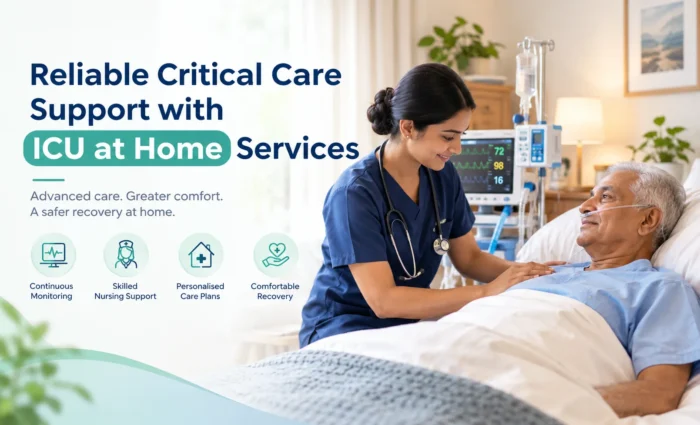



ICU at Home: Exploring Homecare Solutions for Patients
ICU at Home: Exploring Homecare Solutions for Patients Moving from a hospital to home after a serious illness requires careful planning. Apart from medical treatment, families may need to arrange suitable equipment, prepare the home environment and coordinate healthcare professionals according to the patient’s condition. For selected patients, ICU at Home may be considered when the treating doctor confirms that home-based medical care is appropriate. A planned transition can help families understand their responsibilities and arrange the necessary support before the patient returns home. NIAC homecare offers Homecare Solutions to address different healthcare requirements through suitable home-based care arrangements. Preparing the Home Environment for Medical Care A home environment may need certain adjustments before medical care begins. The designated area should provide sufficient space for the patient’s bed, medical equipment and healthcare professionals. Easy access around the bed is also important for routine patient care and safe movement. Families should consider the following arrangements: Space and accessibility: Keep the care area clean, organised and accessible for healthcare professionals. Electrical requirements: Check the power supply and equipment requirements with the healthcare provider. Patient comfort: Arrange suitable bedding, lighting and ventilation according to the patient’s needs. Equipment placement: Keep medical devices positioned according to professional instructions without blocking access to the patient. These arrangements should be finalised based on the patient’s medical requirements and the equipment being used. Understanding Medical Equipment Coordination Medical equipment plays an important role in planned home-based care. However, every patient does not require the same devices. The treating doctor should identify the equipment needed according to the prescribed treatment and monitoring plan. Depending on clinical requirements, the setup may include: Hospital beds for appropriate patient positioning. Multiparameter monitors for monitoring prescribed vital signs. Oxygen support systems when medically indicated. Suction machines for specific respiratory care requirements. Infusion pumps for controlled administration of prescribed fluids or medication. Families should understand the basic operating instructions, equipment maintenance requirements and whom to contact if a device develops a problem. Equipment settings should only be changed by authorised healthcare professionals. Medical Equipment Available on Rent and Sale Patients receiving medical care at home may require different medical equipment depending on their condition and the treating doctor’s recommendations. We provides medical equipment on rent and sale, including hospital beds, oxygen concentrators, patient monitors, suction machines and wheelchairs, to support different homecare requirements. For equipment availability, rental charges, purchase prices and further details, contact NIAC homecare team directly. Need Medical Equipment? Call NIAC Homecare Team : +91-9871565439 Coordinating Medical Professionals and Family Responsibilities Successful home-based care requires clear communication between healthcare professionals and family members. Before the patient is discharged, responsibilities should be discussed to avoid confusion during ongoing care. Some important areas of coordination include: Medical instructions: Keep discharge summaries, prescriptions and treatment instructions available for reference. Nursing arrangements: Confirm the required nursing support, duty hours and responsibilities according to the patient’s condition. Medication planning: Follow the prescribed medication schedule and clarify any doubts with the treating doctor or nursing professional. Emergency preparedness: Understand the emergency contact process and arrangements for shifting the patient to a hospital if the condition requires immediate medical attention. Clear communication helps everyone involved understand their role in the patient’s care. How NIAC Supports Homecare Requirements Home-based healthcare needs may vary depending on the patient’s condition, prescribed treatment and level of medical assistance required. Arranging appropriate support involves understanding these requirements before finalising a care plan. NIAC provides Homecare Solutions for eligible patients who require planned healthcare support at home. The arrangements can be explored according to individual care requirements, including medical assistance, nursing support and relevant equipment needs. Families can connect with NIAC to understand the available options and discuss the support required for their patients specific situation. Planning a Safe Transition from Hospital to Home The transition from hospital care to a home setting should always be guided by the treating doctor. Before discharge, families should confirm that the required medical support, equipment and professional assistance are available. It is equally important to understand that home-based care is not suitable for every patient. Individuals who require emergency intervention, advanced life support or continuous hospital-level intensive care should remain under appropriate hospital supervision. With proper assessment and coordination, suitable patients may continue their recovery at home with planned medical assistance. NIAC’s Homecare Solutions provide an option for families exploring healthcare support according to their needs.