

Tele and Smart ICU
NIAC helps hospitals extend critical care support through remote monitoring and centralized clinical oversight. Tele and Smart ICU connects hospital ICU teams with remote critical care specialists, allowing patient information to be reviewed and relevant medical support to be provided alongside care.
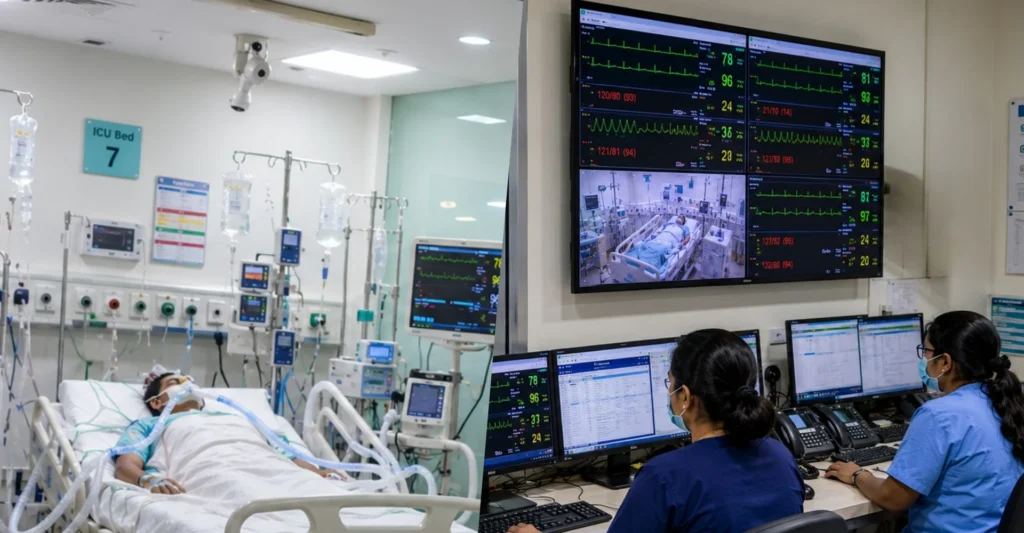
Remote ICU Monitoring Through NIAC's Centralized Command Center
Our centralized command center provides a remote point for monitoring ICU patients and coordinating with hospital teams. Online critical care specialists can support the remote monitoring process by reviewing relevant clinical information and communicating with the hospital’s on-site team when required. The model allows critical care information to be reviewed away from the bedside while the hospital’s own clinicians continue to manage patients directly.
24/7 Remote ICU Monitoring
Continuous 24/7 remote ICU monitoring can help maintain awareness of patient status throughout the day and night. Our remote team can review available ICU information and communicate with the hospital team when clinical attention may be required.
Remote Critical Care Specialist Support
Hospitals can connect their ICU teams with critical care specialists through the remote care model. This gives on-site professionals access to additional clinical expertise when specialist input is required.
Real-Time Patient Monitoring and Alerts
Patient information and relevant alerts can be reviewed through the centralized monitoring system. This can help the remote team recognize changes that may require further assessment by the staff working at the hospital.
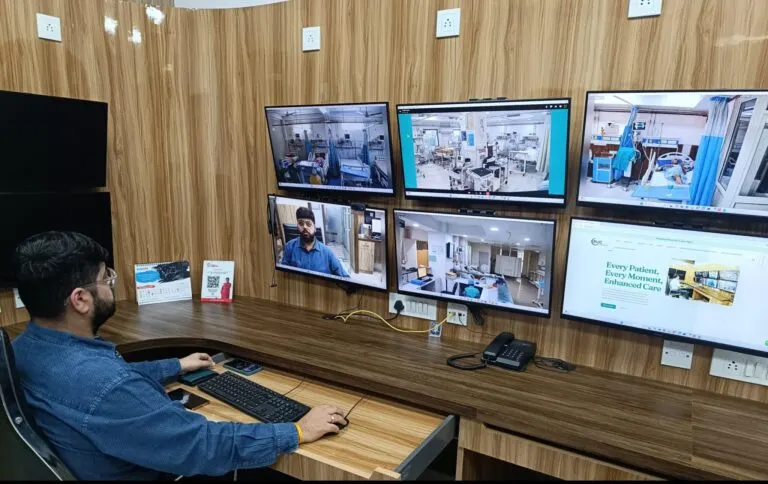
Centralized Clinical Oversight
A centralized setup brings remote monitoring and specialist communication into one coordinated framework. It provides an additional layer of oversight while the hospital’s on-site team remains responsible for direct patient care.
How Tele and Smart ICU Supports Hospital ICU Teams
Tele and Smart ICU is created to work with onsite existing ICU teams. Remote specialists and hospital staff can communicate through the connected system, creating an additional channel for clinical observation and specialist input. This telehealth critical care support can help hospitals access remote specialist guidance, review ICU information, and maintain communication between on-site and remote teams when required.
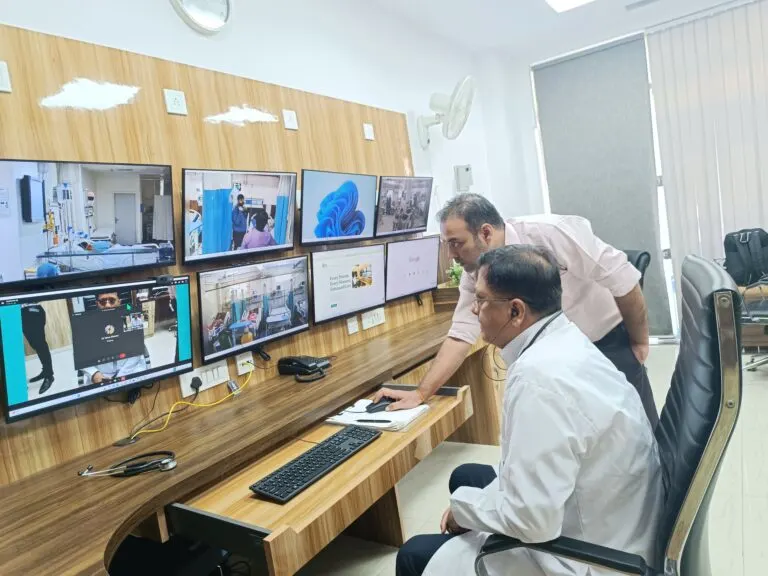
Early Identification of Patient Deterioration
Ongoing review of patient information can help draw attention to changes in a patient’s condition. When a concern is identified, relevant information can be communicated to the on-site team for further clinical assessment.
Remote Support for Ground-Level ICU Teams
ICU specialists can seek input from remote critical care specialists without requiring those specialists to be physically present in the unit. This can provide additional expertise while preserving the role of the hospital’s existing clinical team.
Clinical Coordination Between Remote/Spoke and On-Site Teams
Remote and on-site teams need clear communication for a connected ICU model to work effectively. NIAC facilitates coordination between the centralized team and hospital team so that relevant observations and clinical information can be shared.
Benefits of Tele and Smart ICU for Hospitals
A remote ICU model can give hospitals another way to access critical care expertise and strengthen clinical oversight. Tele Critical Care Services can be particularly useful for facilities looking to complement their existing ICU resources with centralized monitoring and specialist access. This approach can also support communication between remote specialists and on-site hospital teams when additional clinical input is needed.
Access to Critical Care Expertise
Hospitals can connect their ICU teams with critical care specialists through remote clinical support. This provides an additional source of expertise without requiring every specialist to be physically present at the facility.
Technology-Enabled Clinical Support
The Tele & Smart ICU service provides remote clinical support with digital monitoring by the NIAC. Technology enables patient information to be reviewed centrally and supports communication between the remote and hospital teams.
Scalable ICU Support
The level of remote involvement can be considered according to the hospital’s ICU setup and requirements. This allows facilities to explore a model that complements their existing resources rather than replacing their established on-site operations.
Connect Your Hospital With NIAC's Tele and Smart ICU
Hospitals interested in remote ICU monitoring can discuss their current ICU setup, clinical requirements, and desired level of remote involvement with NIAC. Our team can review these requirements and discuss how Tele and Smart ICU support may fit within the existing operations. Smart ICU Management Solutions can be planned according to the hospital’s infrastructure, monitoring needs, patient volume, and level of remote specialist support required.

Contact NIAC to discuss your hospital’s ICU and critical care requirements.
Frequently Asked Questions
What is a Tele and Smart ICU?
A Tele and Smart ICU connects an ICU with remote critical care team through monitoring and communication technology. It allows patient information to be reviewed remotely while the hospital team continues to provide direct care.
How does NIAC's Tele and Smart ICU work?
NIAC’s model uses a centralized command centre to support remote monitoring and communication with hospital ICU teams. Remote specialists can review relevant information and provide clinical input when required.
What does NIAC's remote ICU monitoring include?
The service can include continuous review of available patient information, monitoring of relevant alerts, and communication between remote specialists and the hospital’s bedside team.
How can Tele and Smart ICU support our existing ICU team?
It provides an additional channel for specialist input and remote observation. The hospital’s own clinicians continue to manage patients at the bedside while the remote team provides complementary support.
How can our hospital implement NIAC's Tele & Smart ICU support?
Hospitals can share information about their ICU setup, monitoring requirements, and existing clinical team with NIAC. Based on those requirements, the team can discuss a suitable approach to implementing remote ICU support.