
ICU Setup & Planning

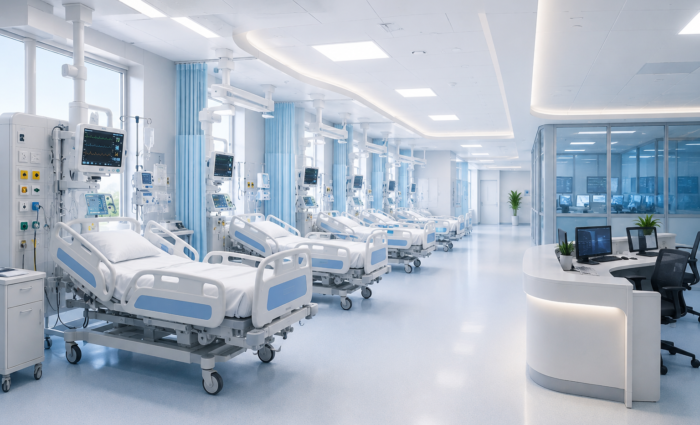
ICU Setup & Planning An Intensive Care Unit is more than a collection of monitors, ventilators, and critical care beds—it is the heart of a hospital’s emergency response and one of the most important determinants of patient outcomes. A well-planned ICU must balance clinical excellence, patient safety, operational efficiency, and future scalability. At NIAC, we believe that every ICU should be designed around the needs of both patients and healthcare teams. Our ICU setup and planning services begin with a comprehensive assessment of the hospital’s infrastructure, patient load, specialty requirements, and long-term growth objectives. We work closely with hospital leadership, clinicians, architects, and biomedical teams to create critical care environments that are functional, efficient, and prepared for evolving healthcare demands. NIAC’s Comprehensive Approach to ICU Setup and Planning Our approach covers every aspect of ICU development, including infrastructure planning, bed allocation, equipment selection, workflow design, infection control measures, staffing models, clinical protocols, and technology integration. Special emphasis is placed on creating seamless patient care pathways, reducing response times, optimizing resource utilization, and ensuring compliance with national and international critical care standards. Whether establishing a new ICU, expanding existing critical care services, or upgrading facilities to support advanced care delivery, NIAC provides end-to-end guidance from concept to commissioning. By combining clinical expertise with operational insight, we help hospitals build ICUs that not only save lives but also enhance efficiency, strengthen reputation, and support sustainable growth. Because when every second matters, the design, planning, and management of an ICU can make the difference between a good outcome and a great one. Great ICUs are not built around equipment—they are built around the ability to deliver the right care, at the right time, for the patients who need it most Beyond infrastructure and equipment, a successful ICU requires a carefully designed operational framework that supports clinical excellence every hour of every day. From defining staffing patterns and escalation protocols to integrating digital monitoring systems and quality assurance measures, every component plays a vital role in patient care. NIAC’s expertise extends beyond setup to creating sustainable critical care ecosystems that improve efficiency, enhance staff productivity, and support better clinical outcomes. Our goal is to help hospitals establish ICUs that are not only capable of managing today’s critical care challenges but are also prepared to adapt to future advancements in healthcare. By combining strategic planning, evidence-based critical care practices, and operational expertise, we enable hospitals to transform their ICUs into centers of excellence that inspire confidence among clinicians, patients, and healthcare leaders alike. NIAC Critical Care & ICU Management  ICU Outsourcing Services End-to-End ICU Management Critical Care Management Critical Care Specialist Services ICU Staffing Solutions ICU Setup & Planning 24×7 Critical Care Coverage Remote Intensivist Monitoring Hospital Operations Management ICU Bed Utilization Optimization Icu set up at ur hosp Intensive Care Management Budget ICU Critical Care services under one umbrella

 

How Hospitals Can Reduce Operational Costs and Increase Revenue Through Efficient ICU Management

How Hospitals Can Reduce Operational Costs and Increase Revenue Through Efficient ICU Management In today’s rapidly evolving healthcare environment, hospitals are expected to deliver exceptional patient outcomes while simultaneously managing rising operational costs and increasing financial pressures. Among all hospital departments, the Intensive Care Unit (ICU) remains one of the most critical as well as one of the most resource-intensive areas. ICUs require highly skilled manpower, continuous patient monitoring, timely clinical decision-making, and access to specialist expertise around the clock. While these requirements are essential for patient care, they often lead to significant operational challenges and increased expenditure for hospitals. The Growing Challenges of ICU Operations in Modern Hospitals Many healthcare institutions struggle with maintaining continuous critical care coverage due to shortages of trained intensivists and critical care specialists. The cost of deploying full-time specialist teams, ensuring 24×7 availability, and managing complex ICU workflows can place a considerable burden on hospital resources. In addition, delays in clinical coordination, prolonged ICU stays, patient referrals to tertiary care centers, and inefficient utilization of beds and infrastructure can negatively impact both patient outcomes and hospital profitability. Why Efficient ICU Management Is Critical for Healthcare Sustainability Efficient ICU management has therefore become much more than a clinical necessity. One of the most effective approaches to modern ICU management is the integration of Tele ICU and Hybrid ICU models. These models allow hospitals to extend specialist critical care expertise beyond physical limitations and ensure continuous clinical oversight without the need for expensive full-time specialist deployment. NIAC Pvt. Ltd. has developed a comprehensive ICU management framework designed to address these challenges and help hospitals build sustainable critical care systems. By combining onsite intensivist services, resident doctor deployment, Tele ICU support, and Hybrid ICU operational models, NIAC enables hospitals to strengthen their critical care capabilities while improving overall efficiency. This integrated approach ensures that bedside clinical teams have access to expert guidance whenever required, creating a seamless ecosystem of collaborative care. NIACsync Platform: Driving Digital Transformation in ICU Management At the heart of this model is the NIACsync platform, an advanced digital solution designed to support real-time patient monitoring, centralized clinical communication, remote specialist consultation, and integration with existing Hospital Information Systems (HIS) and Laboratory Information Systems (LIS). Through continuous monitoring and data-driven clinical support, healthcare teams can identify patient deterioration earlier, respond more effectively to emergencies, and make faster treatment decisions. This not only enhances patient outcomes but also reduces avoidable complications and unnecessary treatment costs. From an operational perspective, better ICU management contributes significantly to cost optimization. Continuous specialist oversight and standardized clinical workflows help reduce unnecessary ICU length of stay, allowing hospitals to improve bed turnover and maximize infrastructure utilization. Efficient resource allocation minimizes staffing inefficiencies and reduces the financial burden associated with maintaining large critical care teams. Furthermore, enhanced clinical coordination improves communication between doctors, nurses, and specialists, reducing delays and improving overall workflow efficiency. The financial benefits of an optimized ICU extend far beyond cost reduction. Hospitals with strong critical care capabilities are able to retain a greater number of complex and high-acuity patients who might otherwise be referred to larger tertiary centers. Improved patient confidence, stronger clinical outcomes, and enhanced service capabilities contribute to increased admissions and higher occupancy rates. As hospitals develop a reputation for delivering advanced critical care services, they strengthen their market position and create new opportunities for growth without necessarily investing in significant additional infrastructure. The future of healthcare is increasingly centered around technology-enabled, collaborative care models that enhance both clinical excellence and operational performance. Hospitals that embrace innovative ICU management strategies today are better prepared to meet the growing demands of critical care while ensuring financial sustainability. By integrating expert clinical leadership, digital health technologies, and streamlined operational processes, hospitals can transform their ICUs into high-performing centers of excellence. Conclusion Through its comprehensive ICU management solutions and the NIACsync platform, NIAC Pvt. Ltd. is helping hospitals achieve this transformation. By reducing operational costs, improving resource utilization, enhancing patient outcomes, and supporting revenue growth, NIAC enables healthcare institutions to build future-ready ICU systems that deliver measurable value for patients, clinicians, and hospital administrators alike.

Contact Us

(24/7 Support Line)
10am-> 05 pm
Democracy Blvd.

Follow Us