
BLS Training
What is Basic Life Support (BLS) Training?
Basic Life Support (BLS) Training focuses on early recognition of emergencies and immediate response until advanced medical help arrives. The training emphasizes CPR (Cardiopulmonary Resuscitation), airway management, choking relief, and AED awareness.
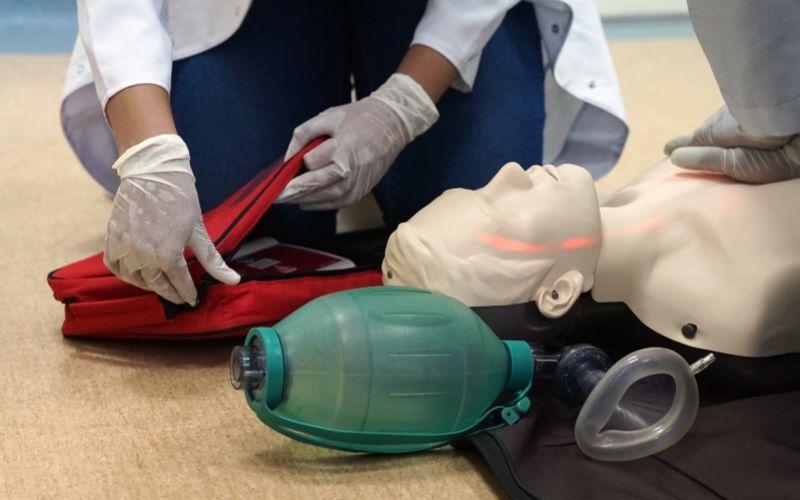
A BLS Provider Course is designed to train participants in:
- Adult, child, and infant CPR
- Rescue breathing techniques
- Choking management
- Scene safety and emergency response
- Early activation of emergency medical services
BLS training is widely recommended for healthcare workers, teachers, security staff, caregivers, fitness trainers, corporate employees, and responsible citizens.
BLS Training Program (Non-AHA): What Does It Mean?
A Non-AHA BLS Training Program means the course is not directly certified by the American Heart Association, but is still based on globally accepted resuscitation guidelines and best practices.
Non-AHA BLS programs:
- Follow evidence-based CPR and emergency response protocols
- Focus strongly on hands-on practical training
- Are suitable for institutional, workplace, and community safety needs
- Are commonly accepted by schools, corporates, hospitals, and organizations
These programs are especially useful where practical skill development and regular refresher training are prioritized over international brand certification.
BLS Certification: Why It Matters
Completing a BLS course provides you with a BLS certification, which serves as proof of your emergency response training. While Non-AHA certification may differ in branding, the skills and competencies gained remain critical and life-saving.
BLS certification is beneficial for:
- Workplace safety compliance
- School and institutional preparedness
- Healthcare and allied health professionals
- Emergency response teams
- Personal skill development and confidence
Most BLS certifications are valid for 1–2 years, after which refresher training is recommended.
BLS Training Near Me: Who Should Enroll?
If you are searching for BLS training near me, you are likely:
- A healthcare or allied health professional
- A teacher or school staff member
- A corporate employee or safety officer
- A caregiver or fitness professional
- A student or volunteer
BLS training is suitable for both medical and non-medical participants, and no prior clinical knowledge is required.
BLS Training Online vs Practical Training
Many people explore BLS training online for convenience. Online modules are useful for understanding theory, but BLS is a skill-based program that requires hands-on practice.
A balanced BLS training program usually includes:
- Online or classroom theory sessions
- Practical CPR practice on mannequins
- AED demonstrations
- Scenario-based emergency drills
This blended approach ensures participants can confidently perform BLS skills in real emergencies.
BLS Provider Course
The BLS Provider Course by NIAC is a structured training program designed to equip participants with essential life-saving skills required during medical emergencies. The course focuses on high-quality CPR, choking management, rescue breathing, and AED awareness, with strong emphasis on hands-on practical training. NIAC’s BLS Provider Course is suitable for healthcare and non-healthcare participants, helping build confidence, readiness, and effective emergency response in real-life situations.
Conclusion
Basic Life Support BLS Training is no longer optional—it is a vital life skill. Whether you choose an on-site program or a blended online course, a Non-AHA BLS Provider Course can significantly improve emergency preparedness and save lives.
With growing demand for trained first responders, enrolling in a BLS Training Program is an investment in safety, responsibility, and community well-being.
