
By NIAC Health Desk
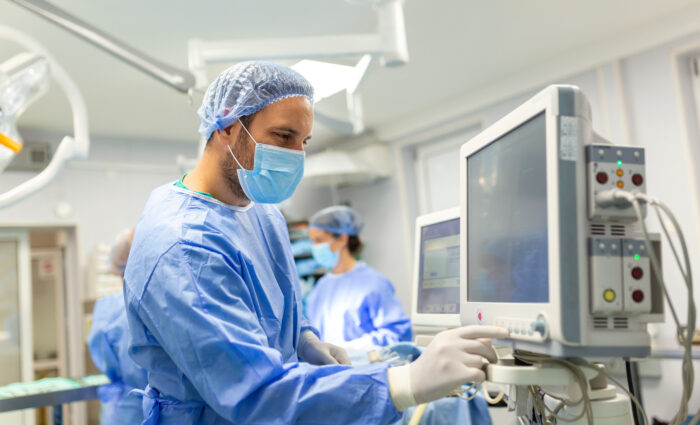
Critical care medicine is undergoing a transformation unlike any other period in modern healthcare. With growing patient loads, shortage of intensivists, and increasing complexity of life-threatening illnesses, new technologies are redefining how ICUs function – and how lives are saved. From AI-powered monitoring to Tele-ICU networks, genome-driven treatment decisions, and advanced organ-support therapies like ECMO, the future is already here.
A New Era of Remote Critical Care
Tele-ICU is emerging as one of the strongest pillars of modern intensive care. Multiple global studies (Young et al., Chen et al.) show that remote monitoring by intensivists reduces mortality, shortens ICU stays, and prevents clinical deterioration.
In India, Tele-ICU adoption has skyrocketed due to specialist shortages and the need for 24×7 expert oversight– especially in Tier-2 and Tier-3 cities. NIAC Pvt Ltd has been at the forefront, supporting partner hospitals with real-time monitoring, video assessment, early warning alerts, and treatment guidance. Rural hospitals now have access to the same level of expertise as large urban centers.
ECMO: The Lifeline for Failing Organs
Extracorporeal Membrane Oxygenation (ECMO) was first used in humans in the early 1970s by Dr. Robert Bartlett, ECMO faced early challenges – coagulation activation, platelet consumption, hemolysis, and limitations in circuit design. Modern ECMO systems incorporate biocompatible tubing, heparin-coated circuits, high-efficiency oxygenators, centrifugal pumps, and precision coagulation monitoring using anti-Xa assays and viscoelastic tests. These advances have significantly reduced complications such as bleeding, thrombosis, and circuit clot formation.
Today, ECMO is widely used in refractory cardiac failure, postcardiotomy shock, severe ARDS, septic shock, and extracorporeal CPR (E-CPR). The CESAR Trial (2009) demonstrated improved survival in severe respiratory failure, while subsequent meta-analyses (Munshi et al., 2019; Combes et al.) showed reduced mortality when ECMO is initiated early in appropriate candidates. The COVID-19 pandemic further established ECMO as a crucial rescue therapy.
Continuous Renal Replacement Therapy (CRRT)
Traditional dialysis is usually performed on an intermittent schedule – typically a few sessions each week. However, this approach is not always ideal for critically ill patients who may experience unstable blood pressure during rapid fluid shifts. To address this challenge, Peter Kramer introduced continuous arteriovenous hemofiltration (CAVH) in 1977.
With continued advancement in equipment and techniques, CAVH eventually led to the development of continuous veno-venous hemofiltration (CVVH), which is widely used in ICUs today. CVVH operates continuously over 24 hours, offering smoother and more controlled fluid management.
Over a period of 48 hours, CVVH is capable of removing more fluid compared to standard intermittent dialysis, making it extremely helpful for patients who have undergone significant fluid resuscitation. It is also beneficial for conditions such as cerebral edema, where maintaining stable blood pressure and osmolar balance is crucial. CVVH clearly offers advantages in specific groups of critically ill patients, particularly those with unstable circulation, brain swelling, or severe fluid overload. For these reasons, CRRT modalities like CVVH have become an integral component of modern intensive care practice since the early 21st century.
AI, Automation & Predictive Analytics
Artificial Intelligence (AI) is reshaping the future of intensive care, bringing unprecedented speed, accuracy, and predictive power to clinical decision-making. At its core, AI uses advanced algorithms that allow machines to recognize patterns, interpret data, make inferences, and support complex medical decisions.
Today, AI-driven tools are increasingly being integrated into real-world ICU environments. Regulatory bodies such as the FDA have approved several medical AI applications – ranging from cardiac rhythm interpretation platforms (like DeepRhythmAI) to smart respiratory monitoring systems (such as Apple’s IRNF App and NuvoAir’s Air Next). These solutions assist clinicians with continuous monitoring and early detection of deterioration.
The COVID-19 pandemic accelerated AI innovation in critical care. Advanced models were developed to interpret chest X-rays and identify patients at higher risk of complications. Research teams from institutions like Mount Sinai and the University of Minnesota collaborated with major digital health partners to create rapid diagnostic and prognostic AI systems. Tools such as COViage and CLEWICU are now capable of predicting critical events like respiratory failure, hypotension, and the need for intubation – providing clinicians with crucial lead time to intervene.
AI is no longer a futuristic concept in critical care – it is an essential tool helping ICU teams make faster, smarter, and more personalized decisions that ultimately save lives.
Genome-Based Precision Medicine
The next revolution comes from inside the patient – their DNA. Genomic sequencing is helping determine how patients respond to infections, drugs, and immunotherapies.In critical care, genomics is guiding:
- Early identification of sepsis-prone individuals
- Predicting drug metabolism (pharmacogenomics)
- Tailoring ventilatory and sedation strategies
- Understanding inflammatory response patterns
Personalized ICU medicine is no longer a concept – it is becoming standard practice.
Biomarkers: Fast, Accurate, Life-Saving
Biomarkers like procalcitonin, lactate, BNP, troponin, IL-6, and D-dimer are transforming bedside decision-making. They help clinicians:
- Identify infections faster than cultures
- Assess severity of shock
- Predict organ failure
- Decide when to de-escalate antibiotics
- Monitor response to therapies
Combining biomarkers with AI and tele-monitoring provides unprecedented accuracy in early diagnosis.
Infection Control Evolves Beyond Hand Hygiene
ICUs still face an alarming 19% infection rate – far higher than general wards. Innovations such as UV-C decontamination, electronic hand-hygiene monitoring, vaccination protocols, and biocontainment units are now standard strategies to combat healthcare-associated infections .
Patient-Centered ICU Care
Modern ICUs prioritize not just survival, but overall patient well-being. Tools like family-centred rounds, virtual visitation, education platforms, and patient-controlled comfort systems redefine the emotional and psychological experience of critical illness – a major shift from older, machine-dominated care models .
THE BOTTOM LINE
Critical care medicine is no longer confined to physical ICU walls. With tele-ICU expansion, AI-guided decision support, advanced organ-support therapies like ECMO, and robust infection-control technologies, hospitals across the world – including underserved regions – can now offer care once limited to elite tertiary centers.
The 21st-century ICU is fast becoming a fusion of human expertise, digital oversight, and precision-driven interventions – ultimately improving survival, safety, and equity in healthcare.